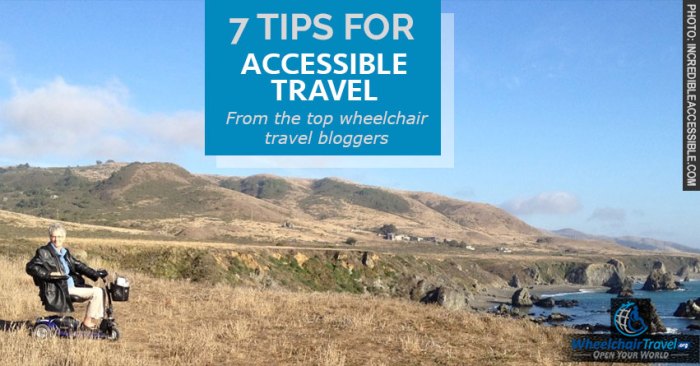
Accessible travel tips are crucial for ensuring a smooth and enjoyable experience for travelers with disabilities. This guide delves into the essential aspects of planning accessible trips, from researching accessible features and communicating your needs to navigating airports and finding suitable accommodations. We’ll explore various transportation options, discuss accessible activities and attractions, and offer advice on finding affordable travel solutions.
Ultimately, the goal is to empower you to confidently plan and enjoy your travels.
This comprehensive resource covers everything from detailed checklists and sample itineraries to helpful tips for communicating your accessibility needs with travel providers. We’ll explore diverse accommodation options, including hotels, vacation rentals, and cruise ships, providing insights into their accessibility features and booking processes. Furthermore, we will equip you with the knowledge and resources to navigate airports and public transportation systems seamlessly, ensuring a stress-free journey.
Planning Accessible Travel
Planning an accessible trip requires meticulous attention to detail, ensuring a smooth and enjoyable experience for everyone. This involves careful consideration of various aspects, from booking flights and accommodations to arranging transportation and activities. Thorough research and proactive communication are key to a successful and stress-free accessible vacation.
Accessible Travel Checklist
A comprehensive checklist is essential for planning accessible trips. This ensures you don’t overlook crucial details. The following checklist covers key areas for consideration:
- Flights: Confirm airline accessibility policies, including wheelchair assistance, onboard accessibility features, and baggage allowance for mobility aids. Pre-book assistance at least 48 hours in advance.
- Accommodation: Research hotels and other accommodations with accessible rooms. Verify features such as roll-in showers, grab bars, ramps, and appropriate bed height. Request confirmation of these features in writing.
- Activities: Identify accessible attractions, tours, and activities at your destination. Check websites for details on accessibility features, such as ramps, elevators, and accessible restrooms. Contact the venues directly to confirm accessibility and make any necessary arrangements.
- Transportation: Research accessible transportation options, including public transport, taxis, ride-sharing services, and rental cars with adaptive equipment. Book in advance where possible.
- Medical Needs: Pack necessary medications and medical equipment. Inform your travel insurance provider about your accessibility needs and any potential medical emergencies.
- Emergency Contacts: Keep a list of emergency contacts, including local emergency services and your travel agent.
Sample Accessible Vacation Itinerary
This sample itinerary Artikels a week-long accessible vacation to London, England: Day 1: Arrive at Heathrow Airport (LHR). Pre-booked wheelchair assistance will be waiting. Transfer to an accessible hotel in central London via accessible taxi. Explore the immediate vicinity of the hotel. Day 2: Visit the Tower of London.
The Tower offers accessible entrances, ramps, and elevators. Pre-book tickets to avoid queues. Use accessible public transportation (London Underground – certain lines have step-free access) to travel to the Tower. Day 3: Explore the British Museum. The museum has excellent accessibility features, including ramps, elevators, and accessible restrooms.
Use accessible public transport. Day 4: Take a ride on the London Eye. The Eye has accessible boarding and viewing platforms. Use accessible public transport. Day 5: Visit Westminster Abbey and the Houses of Parliament.
Check their websites for accessibility information and plan your route accordingly. Use accessible public transport. Day 6: Explore Hyde Park. Many paths are paved and accessible. Use accessible public transport or a taxi.
Day 7: Depart from Heathrow Airport (LHR) with pre-booked wheelchair assistance.
Communicating Accessibility Needs Effectively
Clear and proactive communication is crucial. Here are five tips for communicating accessibility needs:
- Be specific: Clearly articulate your specific accessibility requirements. For example, instead of saying “I need wheelchair access,” specify the type of wheelchair, the level of assistance needed, and any other specific needs.
- Provide documentation: If possible, provide supporting documentation, such as a doctor’s note or a letter from a disability organization.
- Contact providers directly: Contact airlines, hotels, and tour operators directly to discuss your needs and confirm accessibility features.
- Confirm in writing: Always request written confirmation of accessibility arrangements. This provides documentation in case of any issues.
- Allow ample time: Allow ample time for communication and booking. Many accessible services require advance booking.
Importance of Researching Accessibility Features
Researching accessibility features before booking is paramount. It prevents disappointment and ensures a stress-free trip. Websites, online reviews, and direct contact with providers can provide valuable information on the accessibility of specific locations and services. Ignoring this step can lead to unexpected challenges and difficulties during the trip.
Accessibility Features of Transportation Modes
This table compares the accessibility features of different transportation modes:
| Mode of Transportation | Wheelchair Accessibility | Accessible Restrooms | Assistance Available |
|---|---|---|---|
| Air Travel | Generally good, but varies by airline and aircraft. Pre-booking is essential. | Usually available on larger aircraft. | Wheelchair assistance available at most airports, but pre-booking is crucial. |
| Rail Travel | Improving, but varies significantly by country and rail company. Check specific train details. | Available at most stations, but frequency varies. | Assistance may be available, but pre-booking is recommended. |
| Road Travel (Buses & Taxis) | Accessibility varies greatly. Check with the specific bus company or taxi service. | Generally not available on buses. Taxi accessibility varies. | Limited assistance may be available. |
Finding Accessible Accommodation
Securing suitable accessible accommodation is a crucial step in planning any accessible trip. The right lodging can significantly impact the comfort and enjoyment of your travels, ensuring a smooth and stress-free experience. Finding accessible options requires proactive research and careful consideration of your specific needs.Finding the right accessible accommodation involves exploring a range of options and understanding the accessibility features offered by each.
This includes understanding the variations in accessibility across different lodging types and knowing how to effectively communicate your needs to potential providers.
Types of Accessible Accommodation
Accessible accommodation encompasses a variety of lodging options, each offering varying levels of accessibility features. Hotels, vacation rentals, and cruise ships all provide accessible rooms or cabins, but the specific features available can differ significantly. Hotels typically offer accessible rooms with features like roll-in showers, grab bars, and lowered countertops. Vacation rentals offer more varied accessibility, ranging from fully adapted homes to those with only basic features.
Cruise ships provide accessible staterooms with features tailored to the unique challenges of traveling on a ship, such as wider doorways and accessible bathrooms. Careful research is essential to identify the specific accessibility features available in each option.
Accessibility Features Offered by Different Hotel Chains
Major hotel chains often advertise accessibility features, but the actual implementation and quality can vary considerably. Some chains are more proactive in ensuring consistent accessibility standards across their properties than others. For example, Marriott’s Accessible Rooms typically include features like roll-in showers and visual alerts for doorbells, while Hilton’s accessible rooms often feature similar amenities, with potential variations between properties.
Independently owned hotels and smaller chains may offer less consistent accessibility, requiring more thorough investigation before booking. It is crucial to check individual property reviews and contact the hotel directly to verify specific accessibility features.
Resources for Finding Accessible Accommodation
Several websites and resources specialize in helping travelers find accessible accommodation. AccessibleGo, for example, provides detailed information on accessible hotels and vacation rentals worldwide. Booking.com and Expedia also allow users to filter search results by accessibility features. These sites often include user reviews that can provide valuable insights into the actual accessibility of a property. In addition to online resources, contacting local disability organizations or tourism boards can yield valuable recommendations for accessible lodging in specific destinations.
Booking Accessible Rooms and Verifying Accessibility Features, Accessible travel tips
When booking an accessible room, it is essential to explicitly state your accessibility requirements during the booking process. This includes specifying the type and level of accessibility needed. After booking, it is crucial to confirm your request with the hotel and verify the specific accessibility features available in your room. Requesting a confirmation email outlining the accessible features included is a helpful way to ensure there are no misunderstandings.
Direct communication with the hotel, including a follow-up call closer to your stay, can be beneficial to confirm all details.
Questions to Ask When Inquiring About Accessibility Features
Detailed questions should be asked to clarify the specifics of accessible rooms. Specific inquiries about the width of doorways, the type of shower, the height of the toilet, and the presence of grab bars are important. Clarifying the availability of visual or auditory alerts for doorbells or alarms is also essential. Inquiring about the availability of accessible parking and the distance to the room from the parking area is equally important.
Asking about the availability of assistive devices or equipment, such as wheelchairs or ramps, should also be considered.
Unique Stays and Treehouses

Unique accommodations, such as treehouses, yurts, and cabins, offer a memorable travel experience, but accessibility can be a significant concern. Many of these properties are designed with unique architectural features that may present challenges for travelers with disabilities. However, with careful planning and communication, it’s possible to find and enjoy accessible unique stays.
Accessibility Challenges in Unique Accommodations
Many unique accommodations, by their very nature, present accessibility challenges. Treehouses, for instance, often involve stairs, uneven terrain, and limited space. Yurts may lack the standard accessibility features found in hotels, such as roll-in showers or ramps. Cabins, while potentially more accessible than treehouses, may still have issues with step access, narrow doorways, and a lack of grab bars in bathrooms.
These challenges can impact travelers with mobility impairments, visual impairments, or other disabilities. Careful consideration of these factors is crucial for a comfortable and safe stay.
Examples of Accessible Unique Accommodations
While many unique accommodations lack accessibility features, a growing number are embracing inclusive design. Some eco-lodges and resorts that feature unique accommodation types are incorporating features such as ramps, wider doorways, accessible bathrooms, and ground-floor units. Several companies specialize in creating accessible treehouses or adaptive designs for unique stays. These accommodations may be advertised as “accessible” or “adaptive,” but it is always best to confirm accessibility features directly with the provider before booking.
For example, some companies now offer treehouses built with wheelchair-accessible ramps and platforms, ensuring safe and easy access to the unique elevated experience.
Tips for Finding Accessible Unique Stays
Finding accessible unique accommodations requires proactive searching and clear communication. Start by using specific s in your search, such as “accessible treehouse,” “wheelchair-accessible cabin,” or “ADA-compliant yurt.” Read reviews carefully, paying attention to comments about accessibility. Contact the accommodation provider directly to discuss your specific needs and request detailed information about accessibility features. Don’t hesitate to ask for photos or videos of the accommodation’s accessibility features.
Websites specializing in accessible travel can also be valuable resources, providing listings and reviews of accessible unique accommodations. Remember, detailed pre-booking communication is key.
Communicating Accessibility Needs to Unique Accommodation Providers
When contacting a unique accommodation provider, be specific and clear about your accessibility needs. Provide a detailed list of your requirements, including mobility aids used, necessary adaptations, and any specific concerns. It’s helpful to use standardized terminology, such as referring to “roll-in showers” or “grab bars.” Request visual aids, such as photos or videos of the accessible features.
Confirm the accessibility features are in place and working correctly before booking your stay. Following up with a confirmation email outlining the agreed-upon accessibility arrangements is also a good practice.
Comparison of Accessibility in Different Unique Accommodations
| Accommodation Type | Accessibility Challenges | Potential Accessibility Solutions | Ease of Finding Accessible Options |
|---|---|---|---|
| Treehouse | Stairs, uneven terrain, limited space | Ground-level treehouses, ramps, wider doorways, adapted platforms | Low; requires significant research and direct communication |
| Yurt | Lack of standard accessibility features, uneven floors | Ramps, wider doorways, accessible bathrooms (added during construction) | Low; often requires custom solutions or finding providers with existing accessibility features |
| Cabin | Steps, narrow doorways, lack of grab bars | Ramps, wider doorways, grab bars, ground-floor units | Moderate; some cabins are designed with accessibility in mind, but still requires careful research |
| Glamping Tent | Uneven terrain, potential for limited space | Hard-surface flooring, wider doorways, accessible bathrooms (added during construction), ground-level location | Low to moderate; requires specific searching and communication |
Houseboat and Yacht Stays
Choosing a houseboat or yacht vacation offers a unique and potentially relaxing experience, but accessibility considerations are crucial for ensuring a comfortable and enjoyable trip for everyone. While not all houseboats and yachts are designed with accessibility in mind, several options exist, and understanding how to find them is key. This section will explore the accessibility features available, tips for locating suitable rentals, and methods for communicating your needs to providers.
Accessibility Features on Houseboats and Yachts
Accessibility features on houseboats and yachts vary greatly depending on the size, age, and specific design of the vessel. Some may offer wider doorways and hallways, ramps instead of stairs, and adapted bathrooms with grab bars and roll-in showers. Larger yachts, particularly those chartered for private use, are more likely to offer customisable accessibility options. However, smaller houseboats or older vessels may have limited or no accessibility features.
It’s essential to inquire specifically about features such as the width of doorways, the presence of ramps or lifts, bathroom adaptations, and the overall layout of the vessel to determine its suitability.
Finding Accessible Houseboat and Yacht Rentals
Locating accessible houseboat and yacht rentals requires proactive searching and clear communication. Start by using specific s in your online searches, such as “accessible houseboat rental,” “wheelchair-accessible yacht charter,” or “ADA-compliant houseboat.” Filter search results by accessibility features when available. Contact rental companies directly to discuss your specific needs and request detailed information about accessibility features. Reading reviews from previous guests can also provide valuable insights into the accessibility of a particular vessel.
Websites specializing in accessible travel often list accessible houseboat and yacht rentals, offering a curated selection.
Examples of Accessible Houseboat and Yacht Rentals
While specific examples are difficult to provide without endorsing particular companies, it is important to note that accessible options do exist. Larger charter companies sometimes have yachts that can be adapted to meet specific accessibility needs, though this often requires advance notice and may incur additional costs. Some smaller, independently-owned houseboat rentals may also have features such as wider doorways or ramps installed.
It is essential to conduct thorough research and direct communication with rental companies to verify accessibility features before booking.
Communicating Accessibility Needs to Providers
When contacting houseboat and yacht rental providers, be clear and specific about your accessibility requirements. Provide a detailed list of your needs, including the type and degree of assistance required, dimensions of mobility aids, and any specific adaptations needed in the bathroom or other areas. Request photographs or videos of the areas in question to better assess suitability.
Don’t hesitate to ask clarifying questions; it is the provider’s responsibility to answer your queries accurately. This open communication will ensure you select a suitable rental and avoid any unexpected challenges during your stay.
Checklist for Verifying Houseboat/Yacht Accessibility
Before confirming your booking, use this checklist to verify accessibility:
- Width of doorways and hallways
- Presence of ramps or lifts
- Bathroom accessibility features (grab bars, roll-in shower, adapted toilet)
- Layout of the vessel and ease of navigation with mobility aids
- Availability of assistive devices (if needed)
- Clear communication with the provider regarding accessibility features
- Review of past guest feedback regarding accessibility
Planning an accessible trip may seem daunting initially, but with careful preparation and the right resources, it can be a rewarding and enriching experience. By understanding your needs, researching accessible options, and communicating effectively with providers, you can unlock a world of travel opportunities. Remember to utilize the various tools and resources mentioned throughout this guide to ensure a comfortable and memorable journey.
Bon voyage!
Expert Answers: Accessible Travel Tips
What are some common accessibility challenges travelers might encounter?
Common challenges include inaccessible transportation, lack of accessible accommodations, difficulty navigating unfamiliar environments, and limited access to activities and attractions.
How far in advance should I book accessible travel arrangements?
Booking well in advance (ideally several months) is recommended, especially for accessible accommodations and transportation, as availability is often limited.
What documentation should I bring regarding my accessibility needs?
Bring any relevant medical documentation, letters from your physician, or other documentation outlining your specific needs and required accommodations.
What if my accessibility needs change during my trip?
Remain in contact with your travel providers and inform them of any changes. Most providers are accommodating and will do their best to assist you.