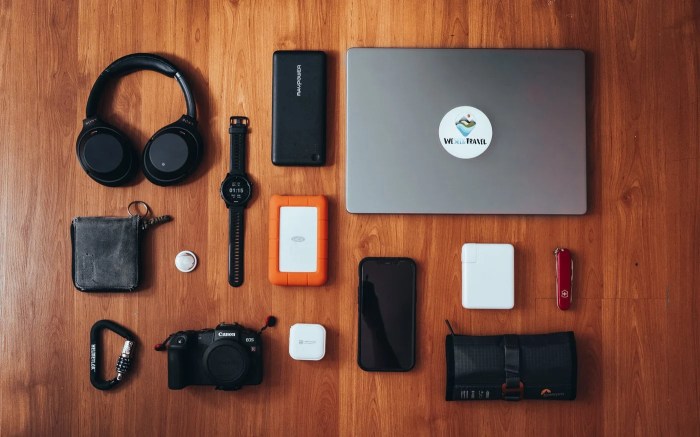
Digital Nomad Packing List: Embarking on a journey as a digital nomad requires meticulous planning, and a well-curated packing list is paramount. This guide delves into the essentials for a successful and comfortable nomadic lifestyle, covering everything from tech necessities and versatile clothing to crucial documents and budget-friendly travel strategies. We’ll explore how to efficiently organize your belongings, maintain your well-being on the go, and stay safe and secure throughout your adventures.
From choosing the right electronics and ensuring data security to packing versatile clothing and maintaining a healthy lifestyle, this comprehensive guide provides practical tips and advice to streamline your packing process and enhance your overall digital nomad experience. We’ll address common concerns, such as budget management, finding affordable accommodations, and navigating various modes of transportation, to ensure you’re well-prepared for any situation.
Essential Packing List Items for Digital Nomads
Packing efficiently as a digital nomad is crucial for comfortable and stress-free travel. A well-organized packing list ensures you have everything you need without carrying unnecessary weight. This list prioritizes versatile items that can be used in various situations and climates, minimizing the need for excessive baggage.
Clothing Essentials for Digital Nomads
Versatile clothing is key to minimizing luggage. Choose items that can be mixed and matched for different occasions and climates. Natural fabrics like cotton and linen are breathable and comfortable in warmer weather, while merino wool offers warmth and odor resistance.
| Clothing Category | Item | Quantity | Notes |
|---|---|---|---|
| Tops | T-shirts | 4-5 | Quick-drying, breathable fabrics |
| Tops | Long-sleeved shirts | 2 | For sun protection and cooler evenings |
| Bottoms | Pants/Jeans | 2 | Versatile styles suitable for various occasions |
| Bottoms | Shorts | 2 | Lightweight and comfortable for warm weather |
| Outerwear | Light jacket/fleece | 1 | For layering and cooler temperatures |
| Underwear | Pairs of underwear | 7 | Quick-drying materials are recommended |
| Socks | Pairs of socks | 7 | Merino wool socks are ideal for odor control |
| Accessories | Scarf/Sarong | 1 | Versatile for sun protection, warmth, or modesty |
| Footwear | Comfortable walking shoes | 1 | Broken-in shoes are essential |
| Footwear | Sandals/Flip-flops | 1 | For warm weather and casual situations |
Essential Electronics for Digital Nomads
Reliable technology is crucial for maintaining productivity while traveling. Ensure all devices are compatible with local power outlets and consider international roaming options for your phone. Back up your data regularly to a cloud service.
| Electronics Category | Item | Quantity | Notes |
|---|---|---|---|
| Computer | Laptop | 1 | Choose a lightweight and durable model |
| Phone | Smartphone | 1 | With sufficient storage and a good camera |
| Power | Universal travel adapter | 1 | Essential for charging devices internationally |
| Power | Portable power bank | 1 | For charging on the go |
| Accessories | Headphones/Earbuds | 1 | Noise-canceling options are beneficial |
| Accessories | USB drive | 1 | For data backup and transfer |
Important Documents for Digital Nomads
Proper documentation is paramount for smooth international travel. Make copies of all important documents and store them separately from the originals. Consider scanning and storing digital copies in a secure cloud service.
| Document Type | Item | Quantity | Notes |
|---|---|---|---|
| Identification | Passport | 1 | Ensure it’s valid for at least six months beyond your travel dates |
| Identification | Driver’s license | 1 | May be required for renting vehicles |
| Visas | Visas (if required) | As needed | Check visa requirements well in advance of travel |
| Health | Travel insurance information | 1 | Keep a physical and digital copy |
| Health | Copies of medical records | 1 | Including any necessary prescriptions |
| Financials | Credit cards | 2-3 | Inform your bank of your travel plans |
| Financials | Debit card | 1 | For accessing local ATMs |
| Other | Flight/Accommodation confirmations | As needed | Keep digital and printed copies |
Toiletries and Essential Items for Digital Nomads
Pack travel-sized toiletries to save space and weight. Consider refillable containers to minimize waste. Include essential medications and any personal care items you need.
| Category | Item | Quantity | Notes |
|---|---|---|---|
| Hygiene | Toothbrush, toothpaste | 1 | Travel-sized options |
| Hygiene | Shampoo, conditioner | 1 | Travel-sized or solid shampoo bars |
| Hygiene | Soap/body wash | 1 | Travel-sized or solid soap |
| Hygiene | Deodorant | 1 | Travel-sized |
| Medications | Prescription medications | As needed | Carry a copy of your prescription |
| Medications | Pain relievers | 1 | For headaches and other minor ailments |
| Other | Sunscreen | 1 | High SPF for sun protection |
| Other | Insect repellent | 1 | Especially important in tropical climates |
Packing Cube System for Efficient Organization
A well-organized packing cube system maximizes space and makes finding items easier. Imagine a medium-sized suitcase.
Cube 1 (Large): Clothing – This cube holds the bulk of your clothing: pants, long-sleeved shirts, and a few t-shirts. This allows you to easily access and layer your clothing. Its purpose is to contain the majority of your wardrobe in a readily accessible manner.
Cube 2 (Medium): Tops and Underwear – This cube contains the remaining t-shirts, underwear, and socks. It’s designed for quick access to everyday essentials.
Cube 3 (Small): Toiletries – This cube holds all toiletries in leak-proof bags, keeping them organized and preventing spills. It’s conveniently placed near the top of the suitcase for easy access at airport security.
Cube 4 (Small): Electronics – This cube contains your laptop charger, portable charger, headphones, and other small electronics, keeping them protected and preventing them from scratching other items.
Cube 5 (Small): Documents and valuables – This cube contains your passport, travel insurance, copies of important documents, and any valuable jewelry in a small, zippered pouch for added security. This cube should be easily accessible for quick checks at security or customs.
Tech Essentials for the Digital Nomad Lifestyle
Embarking on a digital nomad journey requires a robust and reliable tech setup. Your technology will be your office, your connection to clients, and your lifeline to the world. Choosing the right equipment and understanding how to protect your data are crucial for a smooth and productive experience. This section details the essential electronics, accessories, software, and security practices necessary for successful remote work while traveling.
Essential Electronics and Accessories
Maintaining consistent productivity while traveling demands a reliable collection of electronics and accessories. Choosing lightweight, durable, and versatile options is key to minimizing baggage and maximizing efficiency. Power considerations are paramount, especially when navigating varying voltage standards across countries.
- Laptop: A lightweight yet powerful laptop is essential. Consider factors like processing power, battery life, and screen size based on your work requirements. A 13-15 inch laptop offers a good balance of portability and usability. Many digital nomads opt for laptops with long battery life (8+ hours) to minimize reliance on external power sources.
- Smartphone: A smartphone serves as a communication hub, secondary work device, and a versatile tool for navigation and access to information. Ensure it has a good camera for video calls and sufficient storage for work files and apps.
- Portable Wi-Fi Hotspot: Reliable internet access is crucial. A portable Wi-Fi hotspot provides a private and secure internet connection, particularly useful in locations with unreliable public Wi-Fi. Consider data plans that cater to your usage needs and travel destinations.
- Power Adapter Kit: A universal power adapter kit is indispensable for charging your devices in different countries. Check the voltage requirements of your electronics to ensure compatibility with the adapter.
- Portable Battery Pack: A high-capacity portable battery pack provides a backup power source for your devices, especially useful when you’re on the go and access to power outlets is limited. Choose a battery pack with multiple USB ports to charge several devices simultaneously.
- Noise-Cancelling Headphones: Essential for focusing on work in busy environments, particularly in co-working spaces or cafes. Good noise-cancellation allows for uninterrupted calls and concentration.
Protecting Sensitive Data and Maintaining Digital Security
Digital security is paramount for digital nomads. Protecting your sensitive data from theft or unauthorized access is crucial. Employing a multi-layered security approach is recommended.
- Strong Passwords and Password Manager: Utilize a strong, unique password for each account and employ a password manager to securely store and manage them. Avoid reusing passwords across multiple platforms.
- VPN: A Virtual Private Network (VPN) encrypts your internet connection, protecting your data from prying eyes on public Wi-Fi networks. A VPN masks your IP address, enhancing your online privacy and security.
- Two-Factor Authentication (2FA): Enable 2FA wherever possible. This adds an extra layer of security by requiring a second verification method (like a code sent to your phone) in addition to your password.
- Regular Software Updates: Keep your operating system, applications, and antivirus software updated to patch security vulnerabilities.
- Data Backups: Regularly back up your important data to cloud storage services or external hard drives. This safeguards your work in case of device loss or damage.
Essential Software and Applications
The right software and applications can significantly enhance productivity and streamline your workflow. Choosing the right tools depends on your specific needs and work style.
- Communication: Slack, Zoom, Skype, email clients (e.g., Outlook, Gmail).
- Productivity: Google Workspace (Docs, Sheets, Slides), Microsoft 365, Trello, Asana, Notion.
- Security: VPN (e.g., NordVPN, ExpressVPN), password manager (e.g., LastPass, 1Password), antivirus software (e.g., Bitdefender, Norton).
- Finance: Expense tracking apps (e.g., Mint, Personal Capital), online banking apps.
- Other Useful Apps: Language translation apps (e.g., Google Translate), offline maps (e.g., Maps.me), currency converter apps.
Health and Wellness on the Go: Digital Nomad Packing List
Maintaining your health and well-being while embracing the digital nomad lifestyle requires proactive planning and consistent effort. The constant change of environment and time zones can significantly impact your physical and mental state, so prioritizing self-care is paramount. This section details essential strategies and supplies to help you navigate these challenges and stay healthy throughout your travels.
Essential Health and Wellness Items, Digital nomad packing list
A well-stocked travel first-aid kit is your first line of defense against minor ailments. It’s crucial to tailor your kit to your destinations and potential health risks. Beyond the basics, consider including items specific to your needs and any pre-existing conditions.
- First-Aid Supplies: Band-aids, antiseptic wipes, pain relievers (ibuprofen, acetaminophen), anti-diarrheal medication, antihistamines, motion sickness medication, blister treatment, tweezers.
- Medications: Pack any prescription medications with a copy of your prescription, ensuring you have enough for the duration of your trip plus a few extra days. Consider a doctor’s note explaining the medication if travelling internationally. Include any over-the-counter medications you regularly use.
- Travel Insurance: Comprehensive travel insurance is vital. It should cover medical emergencies, evacuations, lost luggage, and trip cancellations. Research various providers to find a policy that suits your needs and budget. Ensure the policy clearly Artikels the coverage provided.
Maintaining Physical and Mental Well-being
The nomadic lifestyle, while exciting, can be demanding. Balancing work, travel, and exploration requires conscious effort to maintain both physical and mental health.
Regular exercise is crucial, even when on the move. Find ways to incorporate physical activity into your daily routine, whether it’s a morning jog, a yoga session in your accommodation, or simply taking the stairs instead of the elevator. Prioritizing sleep is equally important. Aim for consistent sleep schedules, even when adjusting to different time zones. Minimize screen time before bed and create a relaxing bedtime routine.
Mental well-being is equally important. Stay connected with loved ones back home, practice mindfulness or meditation, and find healthy ways to manage stress. Utilize apps or online resources for guided meditations or stress-reduction techniques. Remember to schedule time for activities you enjoy, fostering a sense of balance and purpose.
Staying Healthy in Different Climates and Environments
Adapting to varying climates and environments requires preparation and awareness. Research your destinations to understand potential health risks, such as altitude sickness, foodborne illnesses, or mosquito-borne diseases.
Staying hydrated is crucial, particularly in hot and dry climates. Carry a reusable water bottle and refill it regularly. Be mindful of food safety; choose reputable restaurants and avoid consuming uncooked or undercooked food. Protect yourself from the sun by wearing sunscreen, a hat, and sunglasses. In regions with mosquitoes, use insect repellent and consider preventative malaria medication if advised by your doctor.
Consult a healthcare professional for any specific health concerns related to your travel destinations.
Document and Security Procedures for Digital Nomads
Navigating the world as a digital nomad requires meticulous attention to document management and personal security. Losing vital documents or becoming a victim of theft can severely disrupt your travels and create significant challenges. Proactive planning and careful execution of security protocols are essential for a smooth and safe nomadic experience.Protecting your identity and possessions is paramount. This involves both digital and physical safeguards, encompassing your documents, devices, and personal belongings.
A multi-layered approach, combining preventative measures with responsive strategies, is crucial for mitigating risk.
Safeguarding Important Documents
Maintaining both digital and physical copies of essential documents is a cornerstone of responsible digital nomadism. This redundancy safeguards against loss or damage. Physical copies should be kept in separate, secure locations, perhaps using a combination of a secure hotel safe, a fireproof bag, and a personal carry-on. Digital copies, stored securely in the cloud and on an encrypted external hard drive, offer an additional layer of protection.
Consider using password managers to securely store sensitive information like passport numbers and account details. Examples of essential documents include your passport, visa(s), driver’s license, health insurance card, and any relevant vaccination records. Regularly back up your digital copies to multiple cloud storage services and external drives.
Protecting Against Theft and Loss
Theft and loss are unfortunately realities for travelers. Minimizing risk requires a proactive approach. Avoid displaying expensive electronics or jewelry. Be mindful of your surroundings, especially in crowded areas. Utilize hotel safes for valuables and consider using a money belt or hidden pouch for cash and essential cards.
When traveling with a laptop or other valuable items, use a sturdy, lockable backpack or case. Travel insurance that covers loss or theft of personal belongings is strongly recommended. Consider registering your valuable items with your embassy or consulate; this can aid in recovery in case of theft. Furthermore, familiarize yourself with local laws and customs regarding theft reporting.
In the event of theft, immediately report it to local authorities and your embassy or consulate.
Staying Safe and Aware in Unfamiliar Locations
Situational awareness is crucial for staying safe while traveling. Before arriving in a new location, research local customs, safety concerns, and potential risks. Share your itinerary with trusted friends or family. Avoid walking alone at night in unfamiliar or poorly lit areas. Be cautious when using public transportation and avoid displaying large amounts of cash.
Use reputable transportation services and avoid hitchhiking. Trust your instincts; if a situation feels unsafe, remove yourself from it. Learn basic phrases in the local language to help you communicate in emergencies. Download reliable local maps and transportation apps before you go. Consider using a personal safety app that allows you to share your location with others in real time.
Familiarize yourself with emergency contact numbers for the local police and your embassy or consulate.
Budget Travel Strategies and Resources
Embarking on a digital nomad journey requires careful financial planning. Successfully navigating the costs of travel and maintaining a sustainable budget is crucial for a fulfilling and stress-free experience. This section Artikels strategies and resources to help you effectively manage your finances while traveling.Effective budget management is paramount for long-term digital nomad success. Understanding your spending habits, setting realistic financial goals, and utilizing various resources for affordable travel are key components.
Failing to plan can lead to unexpected financial strain and potentially curtail your nomadic adventure prematurely.
Budget Template for Tracking Expenses
A well-organized budget is essential for monitoring your spending. This template provides a framework for tracking income and expenses throughout your journey. Regularly reviewing your budget allows for adjustments and ensures you stay within your financial limits. Remember to categorize your expenses meticulously for insightful analysis.
| Category | Budget (Monthly) | Actual Spending (Monthly) | Difference |
|---|---|---|---|
| Accommodation | $500 | $450 | $50 |
| Food & Groceries | $400 | $380 | $20 |
| Transportation | $200 | $220 | -$20 |
| Activities & Entertainment | $300 | $250 | $50 |
| Work-Related Expenses | $100 | $110 | -$10 |
| Miscellaneous | $100 | $90 | $10 |
| Total | $1700 | $1500 | $200 |
Resources for Finding Affordable Travel Options
Numerous resources exist to help you find cost-effective flights, accommodation, and activities. Utilizing these resources can significantly reduce your overall travel expenses. Remember to compare prices and read reviews before booking.
Finding affordable flights often involves flexibility with travel dates and destinations. Websites like Skyscanner, Google Flights, and Kayak allow for comprehensive searches and price comparisons across various airlines.
- Skyscanner: A metasearch engine comparing flight prices from various providers.
- Google Flights: Offers price tracking and flexible date searching.
- Kayak: Another metasearch engine with a wide range of flight options.
- Hostelworld/Booking.com: Platforms for finding budget-friendly accommodation, from hostels to guesthouses.
- Airbnb: Offers a wider range of accommodation options, including private rooms and entire apartments.
- Couchsurfing: A platform for finding free accommodation by staying with locals.
- Meetup.com/Eventbrite: Websites for discovering free or low-cost local activities and events.
Comparison of Budget Backpacking and Luxury Travel
Budget backpacking and luxury travel represent two contrasting approaches to digital nomad travel, each with significantly different cost implications. Budget backpacking prioritizes affordability, often involving hostels, budget airlines, and free activities. Luxury travel, conversely, emphasizes comfort and high-end experiences, resulting in considerably higher expenses.
Budget backpacking typically involves staying in hostels, utilizing budget airlines, and engaging in free or low-cost activities. This approach can significantly reduce travel costs, allowing for extended travel periods. Luxury travel, on the other hand, often involves private accommodations, business-class flights, and high-end experiences. This style of travel comes with a considerably higher price tag.
| Feature | Budget Backpacking | Luxury Travel |
|---|---|---|
| Accommodation | Hostels, guesthouses | Luxury hotels, resorts |
| Transportation | Budget airlines, buses, trains | First/Business class flights, private cars |
| Activities | Free walking tours, hiking, local markets | High-end tours, exclusive experiences |
| Food | Street food, local markets | Fine dining restaurants |
| Cost | Significantly lower | Significantly higher |
Flight Deals and Hacks
Securing affordable flights is a crucial aspect of successful digital nomad travel. Budgeting for flights often represents a significant portion of your overall travel expenses, so employing effective strategies to minimize these costs is essential for long-term nomadic lifestyles. This section will Artikel proven methods for finding and booking cheap flights, along with a discussion of the pros and cons of various booking approaches.Finding the best flight deals often involves a combination of timing, flexibility, and strategic use of online tools.
Several key strategies consistently yield significant savings.
Utilizing Flight Comparison Websites
Flight comparison websites aggregate flight data from numerous airlines and travel agencies, allowing you to quickly compare prices across various options. Sites like Skyscanner, Google Flights, Kayak, and Momondo are popular choices, each offering unique features. For example, Google Flights’ price tracking feature sends notifications when prices fluctuate, enabling you to capitalize on price drops. Skyscanner’s “Everywhere” search allows you to explore destinations based on your budget, rather than a specific location.
Effective use of these tools often involves experimenting with different dates and airports (considering nearby alternatives) to identify the most cost-effective options. Many also offer features like filtering by airline preference or layover duration.
Direct Booking versus Third-Party Sites
Booking flights directly through an airline’s website often offers advantages in terms of customer service and potential flexibility with changes or cancellations. However, third-party sites frequently offer competitive prices, sometimes including bundled services like baggage or seat selection. The decision depends on your priorities. If you value seamless customer service and prefer to avoid potential complications with refunds or rescheduling, direct booking is often preferable.
However, if price is your primary concern, comparing offers from both direct booking and third-party sites is recommended. It’s important to carefully review the terms and conditions of any booking, regardless of the method used, paying particular attention to cancellation policies and baggage allowances.
Strategic Flight Booking Timing
Booking flights well in advance can sometimes secure lower fares, but this isn’t always the case. Conversely, last-minute deals can occasionally appear, though these are less predictable and often involve compromises on flight times or routes. Generally, booking between 2-3 months in advance offers a good balance between securing a reasonable price and maintaining flexibility. However, the optimal booking window varies significantly depending on the route, time of year, and demand.
Tracking price trends using flight comparison website tools is a valuable approach to identifying the most favorable booking time for your specific travel plans. Consider that off-season travel generally offers lower prices compared to peak travel periods.
Exploring Alternative Airports and Routes
Flexibility with your departure and arrival airports can lead to substantial savings. Consider flying into or out of smaller, less popular airports near your desired destination. These airports often have lower fares than major international hubs. Similarly, exploring alternative routes, such as flying with multiple layovers, can sometimes be more economical than a direct flight, especially for longer distances.
The trade-off is increased travel time, so carefully weigh this factor against the potential cost savings. For example, flying into a smaller airport in a neighboring city and taking a cheaper ground transportation option can prove more economical than flying directly to a larger, more expensive airport.
Train Travel Guides
Train travel offers a unique perspective for the digital nomad, allowing for scenic routes and often a more relaxed journey than flying. This guide explores navigating train travel internationally, covering booking, schedules, and maximizing comfort. Understanding the nuances of different rail systems is key to a smooth and enjoyable experience.
Booking Train Tickets and Understanding Schedules
International train travel requires careful planning. Websites like Rail Europe (for European travel) and the respective national railway companies’ websites (e.g., Amtrak for the US, Deutsche Bahn for Germany) are essential resources. These sites often allow for advance booking, which can secure better fares and preferred seating. Schedules vary widely depending on the route and country; some routes offer high-speed services while others are slower, regional lines.
It’s crucial to check the schedule meticulously, considering potential delays and connections. Many websites offer real-time tracking and updates, which can be invaluable. When booking, pay close attention to seat selection, especially if traveling long distances, and confirm the baggage allowance policies.
Advantages and Disadvantages of Train Travel
Compared to other modes of transportation, train travel presents distinct advantages and disadvantages. Advantages include scenic views, often more comfortable seating than buses or budget airlines, and the ability to work or relax during the journey. Trains are also frequently more environmentally friendly than planes. However, train journeys can be significantly longer than flights, and ticket prices can be higher, especially for long-distance travel.
Furthermore, train schedules can be less frequent than buses or flights, limiting flexibility. The availability of reliable high-speed rail networks varies considerably across the globe.
Tips for Comfortable and Enjoyable Train Travel
Making train travel comfortable requires some preparation. Packing a comfortable neck pillow and eye mask can improve sleep quality during longer journeys. Bringing snacks and drinks can save money and ensure you have refreshments available. Downloading entertainment like movies or podcasts beforehand is a good idea, especially if Wi-Fi isn’t consistently available. Noise-canceling headphones can be invaluable for blocking out unwanted sounds.
For longer trips, consider packing a small change of clothes to feel refreshed. Staying hydrated is crucial, especially on longer journeys. Remember to check the train’s amenities before departure to avoid any surprises.
Mastering the art of packing as a digital nomad is a journey in itself, a blend of careful planning and adaptable resourcefulness. By utilizing this comprehensive packing list and incorporating the tips and strategies Artikeld, you can confidently embrace the freedom and flexibility of the nomadic lifestyle, knowing that you’re well-prepared for whatever adventures lie ahead. Remember, the key is versatility and efficiency—packing light yet smart, ensuring you have everything you need without being weighed down by unnecessary items.
Commonly Asked Questions
What’s the best way to organize my packing cubes?
Organize by activity or day. For example, one cube for workout clothes, one for everyday outfits, and one for formal wear. This minimizes unpacking and maximizes efficiency.
How do I protect my electronics from damage during travel?
Use protective cases, bubble wrap, and consider investing in a hard-shell carry-on case for extra security. Keep them separate from heavy items.
What about travel insurance? Is it really necessary?
Highly recommended. It provides coverage for medical emergencies, lost luggage, and trip cancellations, offering peace of mind while traveling.
How can I stay connected while traveling internationally?
Research local SIM card options, consider a portable Wi-Fi hotspot, or utilize your phone’s international roaming capabilities (check with your provider for costs).