Traveling with a baby checklist is your essential companion for stress-free journeys. From packing essentials and securing travel documents to navigating flights and finding baby-friendly accommodations, this guide provides a structured approach to planning a smooth and enjoyable trip with your little one. We’ll cover everything from creating a perfectly organized diaper bag to managing feeding schedules in different time zones, ensuring a safe and comfortable experience for both parent and child.
Successfully navigating the complexities of traveling with an infant requires meticulous planning and preparation. This guide aims to equip you with the knowledge and tools to confidently embark on your family adventure, addressing potential challenges proactively and celebrating the joys of exploring new places with your baby.
Essential Packing List for Baby: Traveling With A Baby Checklist
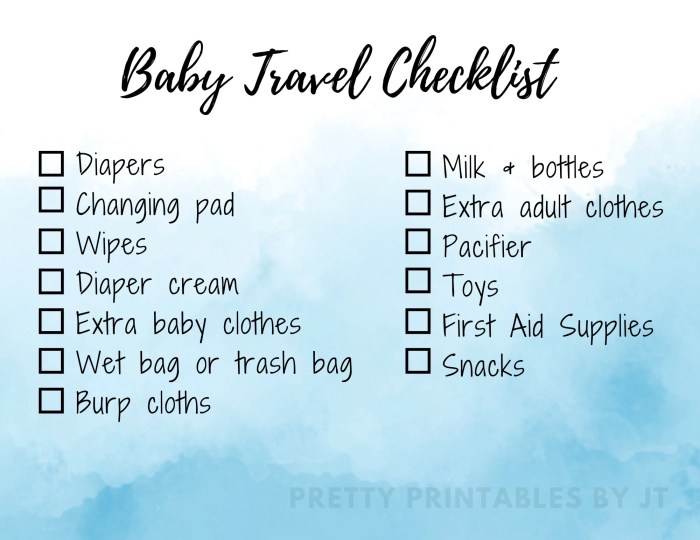
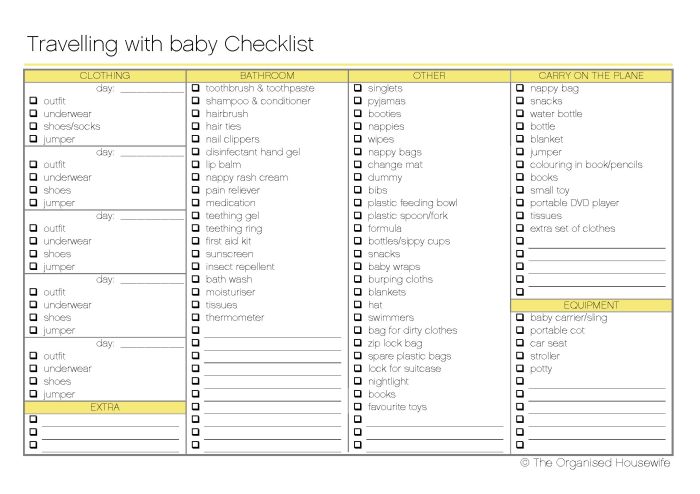
Traveling with a baby requires meticulous planning, and a well-organized packing list is crucial for a smooth journey. This section details the essential items you’ll need to pack for your little one, categorized for easy reference and packing. Remember to adapt this list to your specific trip length and destination climate.
Essential Packing List for Baby
Packing for a baby can feel overwhelming, but a well-organized approach simplifies the process. This table categorizes essential items for easier packing and access during your trip. Remember to consider your destination’s climate and the length of your stay when adjusting quantities.
| Clothing | Feeding | Health | Comfort |
|---|---|---|---|
| Onesies (at least 3-4, more for longer trips) | Bottles (sterilized and ready to use) | Diaper rash cream | Favorite blanket or lovey |
| Sleepers (at least 2-3) | Formula (enough for the entire trip, plus extra) | Thermometer | Pacifiers (if used) |
| Outfits (3-4 changes of clothes, depending on the trip) | Bibs (multiple) | Baby first-aid kit (band-aids, antiseptic wipes, etc.) | Small toys or books |
| Socks (multiple pairs) | Sippy cups (if applicable) | Any prescribed medication (with a copy of the prescription) | Infant carrier |
| Hat (sun hat for sunny destinations) | Snacks (if baby eats solids) | Hand sanitizer | Swaddles (if your baby uses them) |
| Outerwear (jacket, depending on weather) | Reusable food pouches (if applicable) | Sunscreen (SPF 30 or higher) | Changing pad |
Diaper Bag Packing Strategy
Visualizing the contents of your diaper bag is key to quick access during travel. Imagine your bag divided into sections: one for quick-change items, one for feeding, and one for miscellaneous items.
Imagine a diaper bag with three main compartments. The largest compartment holds extra diapers (at least 6-8), wipes, a change of clothes (onesie, pants, socks), a plastic bag for soiled clothes, and a changing pad. The middle compartment contains bottles or formula, sippy cups, snacks, and bibs. The smaller compartment holds items such as hand sanitizer, a thermometer, and any necessary medication.
Easily accessible pockets on the outside can hold pacifiers and a small toy.
Packing Extra Clothing: Handling Unexpected Messes, Traveling with a baby checklist
Always pack extra clothing. Babies are prone to unexpected spills, spit-ups, and diaper blowouts. Packing extra clothing minimizes stress and ensures your baby remains comfortable throughout your travels. For example, consider packing at least two extra outfits for every day of your trip, especially if your baby is still prone to frequent spit-ups or accidents. This will allow for changes of clothing after any messy incidents without needing to resort to laundry facilities, which might not always be available.
Having extra clothes also allows for unexpected weather changes, ensuring your baby stays warm or cool as needed.
Travel Documents and Preparations
Traveling with a baby requires meticulous planning, and securing the necessary travel documents is paramount. Overlooking even a single document can significantly delay or even prevent your trip. This section details the crucial steps to ensure a smooth and stress-free journey.Preparing for international travel with an infant involves more than just packing the diaper bag. You’ll need to navigate the complexities of obtaining essential travel documents, manage healthcare considerations, and arrange for suitable childcare if needed, all while ensuring your little one’s comfort and safety.
Obtaining Necessary Travel Documents for a Baby
Gathering the correct travel documents for your baby is the first, and arguably most important, step. This typically involves obtaining a passport and potentially other documents depending on your destination.
- Passport Application: Begin the passport application process well in advance of your travel dates. Most countries require a passport for infants, even for short trips. You will need to complete the application form, provide your baby’s birth certificate, and possibly a supporting document like a hospital record showing the baby’s birth details. You’ll also need a passport photo of your baby, which should meet specific size and quality requirements.
Expect processing times to vary depending on your location and the time of year.
- Birth Certificate: Your baby’s birth certificate is an essential document for passport applications and may be required for other travel-related purposes. Ensure you have a certified copy, as some countries only accept these. If you have not already received a copy, obtain one from the relevant authorities immediately.
- Visas (If Required): Check the visa requirements for your destination country well in advance. Infant visa requirements can vary significantly, and you might need to apply for a visa for your baby separately from your own application. The process may involve additional documentation and fees.
Informing Relevant Parties About Your Travel Plans
Communicating your travel plans to key individuals ensures a seamless transition and provides necessary support during your trip.
- Healthcare Provider: Schedule an appointment with your pediatrician to discuss your travel plans. They can provide essential advice on vaccinations, necessary medications, and potential health risks specific to your destination. Obtain any necessary prescriptions and ensure you have an adequate supply of any medication your baby requires.
- Childcare Arrangements (If Applicable): If you are using childcare services, inform your provider well in advance of your travel dates. Confirm their policies regarding absences and ensure a smooth handover before and after your trip. If you’re using a daycare or nanny, you might need to provide documentation confirming your baby’s vaccinations and medical information.
Managing Baby’s Travel Insurance and Potential Emergency Situations
Comprehensive travel insurance is crucial, especially when traveling with a baby.
Securing suitable travel insurance that covers medical emergencies, lost luggage, and trip cancellations is essential. Ensure the policy specifically covers infants and addresses potential scenarios such as unexpected medical expenses or flight disruptions. Consider the level of coverage and whether it aligns with your specific needs and destination. For example, a policy with comprehensive medical coverage is advisable for destinations with limited or less advanced healthcare facilities.
Having a detailed plan for potential emergency situations, including knowing the nearest hospital or clinic and having a list of emergency contacts, can help you manage unforeseen circumstances.
In-Flight Considerations for Babies
Air travel with a baby presents unique challenges, but with careful planning and preparation, you can make the journey smoother for both you and your little one. Understanding your baby’s needs and anticipating potential difficulties is key to a more comfortable flight. This section focuses on strategies for managing your baby’s comfort and well-being during the flight, packing efficiently, and handling potential disruptions.Successfully navigating air travel with an infant requires a proactive approach.
Addressing potential issues beforehand, such as ear pressure changes and boredom, will significantly improve the overall experience. Proper packing, considering both space and security regulations, is also crucial for a stress-free journey.
Managing a Baby’s Comfort and Well-being During a Flight
Maintaining your baby’s comfort during a flight involves anticipating their needs and proactively addressing potential problems. Air pressure changes can cause discomfort, and keeping your baby entertained is vital, especially on longer journeys. Offering frequent feedings, particularly during ascent and descent, helps to equalize ear pressure. A pacifier can also be helpful for younger infants. Bringing familiar toys and engaging in quiet play can keep your baby occupied and reduce fussiness.
Remember to pack plenty of diapers, wipes, and changes of clothing to handle any unexpected messes. Consider bringing a favorite blanket or cuddly toy to provide a sense of security.
Packing Appropriately for an Airplane Journey
Packing for an airplane trip with a baby requires careful consideration of space limitations and security regulations. A lightweight, well-organized diaper bag is essential. Pack only the necessities, prioritizing items that are difficult to replace while traveling. Remember that liquids are subject to restrictions, so plan accordingly for formula, breast milk, and baby food. Many airlines allow larger quantities of these items for infants, but it is advisable to check their specific policies beforehand.
Pack layers of clothing to adjust for temperature changes on the plane, and don’t forget essentials like a change of clothes for yourself in case of accidents.
Calming a Crying Baby During Takeoff and Landing
The pressure changes during takeoff and landing can be particularly distressing for babies. Offering a bottle or pacifier during these times helps to equalize the pressure in their ears. Soothing sounds, such as white noise or a familiar song, can also be calming. Physical comfort, such as holding your baby close and gently rocking them, can also help to soothe them.
If your baby continues to cry, try offering a comforting item like a familiar blanket or toy. Remember to be patient and understanding; crying is a normal response to discomfort and unfamiliar situations. It is important to remember that other passengers are usually understanding and empathetic to a crying baby.
Car Seat and Stroller Strategies
Traveling with a baby requires careful consideration of car seat and stroller choices to ensure both safety and convenience. The right equipment can significantly reduce stress and enhance the overall travel experience. Choosing the appropriate car seat and stroller depends heavily on the type of travel, the duration of the trip, and your baby’s age and size.
Car Seat Options for Travel
Selecting the right car seat for travel involves weighing several factors, including safety features, ease of installation, and portability. The following table compares popular car seat options suitable for traveling with infants and toddlers.
| Car Seat Type | Pros | Cons | Suitability for Travel |
|---|---|---|---|
| Infant Car Seat | Easy to install, lightweight, often includes a base for quick attachment/removal. | Limited lifespan (baby outgrows quickly), can be bulky to carry separately from the stroller. | Ideal for shorter trips or as a secondary car seat for rental cars. |
| Convertible Car Seat | Long-lasting (can be used for extended periods), offers rear-facing and forward-facing options. | Generally heavier and bulkier than infant car seats. | Best for longer trips and families who want a single car seat for multiple stages. |
| All-in-One Car Seat | Covers all stages from infant to booster seat, cost-effective in the long run. | Heaviest and bulkiest option; may be difficult to maneuver in tight spaces. | Suitable for families who prioritize cost-effectiveness and want a single car seat for the entire child’s car seat journey. |
| Lightweight Travel Car Seat | Lightweight and portable, easily fits in overhead bins or under seats. | Generally less protective than other options; should only be used for short periods. | Best as a supplemental car seat for short trips, like airport transfers or car rentals, especially when you already have a primary car seat. |
Transporting Car Seats and Strollers
Safe and efficient transportation of car seats and strollers depends significantly on the chosen mode of transportation. For air travel, most airlines allow car seats to be checked as baggage, often free of charge, although some may charge extra depending on size and weight. Always check with your airline beforehand. Consider using a car seat travel bag for added protection.
For road trips, securing the car seat properly in the vehicle is paramount. Strollers can be placed in the trunk, or in some cases, attached to a car roof rack with a dedicated stroller carrier. For train travel, strollers can be folded and stored in overhead compartments or designated areas. Buses usually have designated spaces for strollers, but confirm this with the bus company.
Selecting a Lightweight and Compact Stroller
Choosing a stroller for travel requires prioritizing lightweight, compact designs that can easily navigate various terrains. Consider features such as a one-hand fold mechanism, swivel wheels for maneuverability, and adjustable suspension for bumpy surfaces. Umbrella strollers are extremely lightweight and compact, perfect for short trips and easy storage. Travel systems, which combine a car seat and stroller frame, offer convenience, but they are typically heavier.
Look for strollers with good reviews and consider your budget. A good travel stroller will make a significant difference in your travel experience.
Accommodation and Baby-Friendly Amenities
Choosing the right accommodation is crucial for a relaxing and enjoyable trip with your baby. The right hotel or rental property can significantly reduce stress and allow you to focus on enjoying your time with your little one. Consider the available amenities and services to ensure a comfortable stay for both you and your baby.Finding suitable accommodation involves more than just a comfortable bed; it requires careful consideration of baby-specific needs.
This section Artikels key features to look for and provides questions to ask potential lodging providers to ensure a smooth and stress-free trip.
Key Features of Baby-Friendly Accommodations
A baby-friendly accommodation should provide essential amenities that cater to the needs of infants and toddlers. These amenities simplify travel and create a more comfortable environment for your child. Look for features such as a crib or cot, a high chair, and potentially a play area or other child-friendly spaces. The availability of a microwave and refrigerator can also be incredibly helpful for preparing baby food or warming bottles.
Some hotels even offer baby-sitting services or provide items like a changing mat or baby bath.
Questions to Ask Potential Lodging Providers
Before booking, it’s essential to confirm the availability of necessary amenities. A simple phone call or email can save you potential headaches later.
- Is a crib or cot available in the room, and is it suitable for a child of my baby’s age and weight?
- Do you provide a high chair? If so, what type of high chair is it?
- Are there any child-proofing measures in place, such as outlet covers or safety gates?
- Do you offer any baby amenities, such as a changing mat, baby bath, or baby monitor rentals?
- Is there a microwave and refrigerator available in the room or a nearby common area?
- Is there a laundry service available for washing baby clothes?
- Are there any nearby parks or playgrounds suitable for babies and toddlers?
- What is your policy on early check-in or late check-out, in case of travel delays?
- What is your cancellation policy?
Creating a Comfortable and Safe Sleeping Environment
Even with a crib provided, creating a familiar and safe sleep space for your baby in an unfamiliar setting is crucial. Bring familiar bedding, such as your baby’s favorite blanket or sleep sack, to provide comfort and security. Consider bringing a white noise machine or a nightlight to help your baby adjust to the new environment. Ensure the room is adequately dark and quiet to promote restful sleep.
Always check the crib for any potential hazards, such as loose parts or gaps. If your baby is used to sleeping with a specific stuffed animal or toy, bring that along as well.
Traveling with a baby might seem daunting, but with careful planning and the right resources, it can be a rewarding experience. Remember, the key is preparation. By using this checklist and adapting it to your specific needs and travel style, you can minimize stress and maximize the enjoyment of your family adventure. Embrace the unexpected, celebrate the small victories, and cherish the memories created during your journey.
Essential Questionnaire
What are the best car seats for traveling with a baby?
The best car seat depends on your baby’s age and weight. Consider rear-facing infant car seats for newborns and toddlers, transitioning to convertible car seats as your child grows. Look for features like ease of installation and comfortable padding.
How do I keep my baby entertained on a long flight?
Pack a variety of engaging items: books, toys, rattles, and a few new surprises. Consider downloading age-appropriate apps and shows for tablets. Remember to plan for feeding and comfort breaks to prevent restlessness.
What about jet lag? How can I help my baby adjust?
Maintain a consistent sleep schedule as much as possible, even while traveling. Expose your baby to natural light to regulate their circadian rhythm. Be patient and allow for extra time for your baby to adjust to the new time zone.
How can I find affordable baby-friendly accommodations?
Look for hotels or vacation rentals that offer cribs, high chairs, and other amenities. Websites specializing in family travel often filter results based on these features. Consider traveling during the off-season for better deals.